Contents
- PVC is one of the most widely used polymers; about 57% of its mass is chlorine, so it is flame-retardant and chemically resistant.
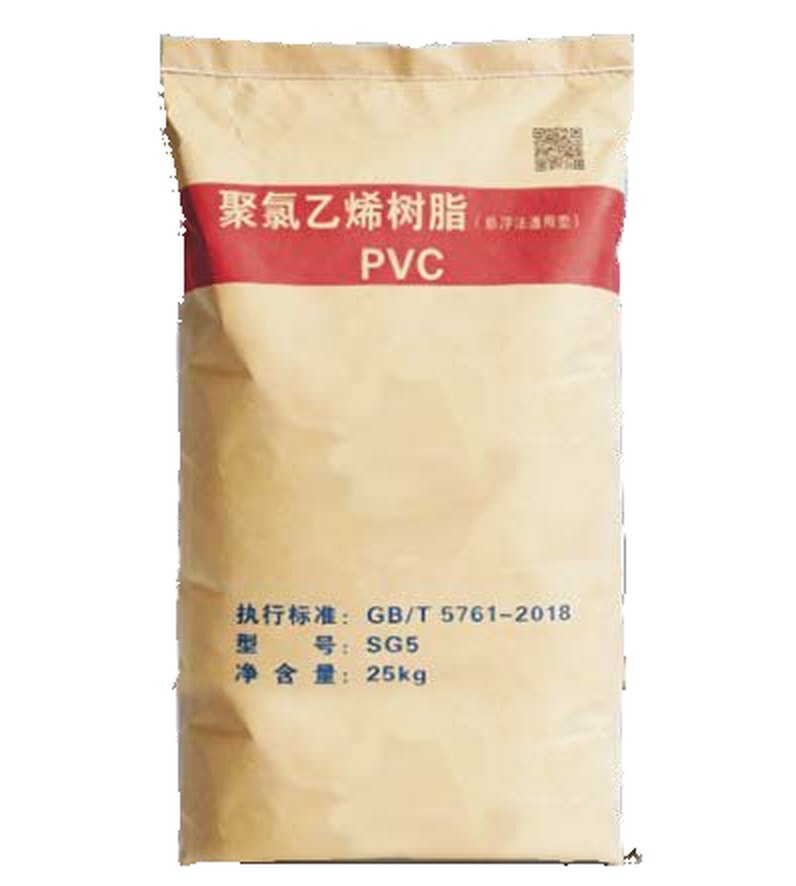
- Pipes, profiles and cables use suspension resin; in China it is graded SG-1 to SG-8, and SG-5 is the usual choice for rigid pipe.
- Kazakhstan has no PVC resin production: processors buy from local traders' stock or import from Russia and China.
- Direct import pays off for regular container lots; local stock suits small volumes and urgent needs.
- Lot-to-lot consistency matters more than the grade name: check the TDS and each lot's COA.
PVC is the thermoplastic behind water and sewer pipes, window profiles, cable insulation, film and flooring. Processors buy it as resin — a white free-flowing powder compounded with stabilisers, fillers, plasticisers and pigments, then extruded, moulded or calendered. For a plant in Kazakhstan, buying resin also means deciding between local stock and direct import, securing consistent quality and planning deliveries.
What PVC is
Polyvinyl chloride · PVC resin
- CAS
- 9002-86-2
- Monomer
- vinyl chloride, C₂H₃Cl
- Chlorine content
- ≈ 57% by mass
- Polymer density
- ≈ 1.38–1.40 g/cm³
- Glass transition
- ≈ 80 °C
- HS code
- 3904 10 (not mixed)
Chlorine makes PVC flame-retardant, resistant to acids, alkalis and salts, and relatively cheap. Its weak point is low thermal stability: overheated, it releases hydrogen chloride and darkens, so stabilisers are always added and extrusion settings are tuned to the resin — another reason consistency between lots matters.
How PVC is made
- 01
Feedstock
Vinyl chloride from ethylene or, by the carbide route, from acetylene made from calcium carbide.
- 02
Polymerisation
Suspension, emulsion or bulk process; conditions set the molecular weight and grade.
- 03
Degassing and drying
Residual monomer is removed, water separated, the resin dried.
- 04
Testing and packing
Each lot is tested and packed in bags or bulk bags.
China is the largest PVC producer, with a high share of the carbide route in Xinjiang, Inner Mongolia, Shaanxi, Ningxia and Qinghai. Resin from large north-western producers such as Xinjiang Tianye often appears in Kazakh listings. Russian producers mainly use ethylene. The route alone does not define quality — compare actual lot values.
Types and SG grades
| Grade | K-value, approx. | Typical use |
|---|---|---|
| SG-3 | ≈ 71–72 | cable compounds, flexible film and hose |
| SG-5 | ≈ 66–68 | pipes, profiles, fittings, rigid sheet |
| SG-7 | ≈ 60–62 | rigid film, injection moulding |
| SG-8 | ≈ 55–59 | clear sheet, injection moulding |
Suspension resin is processed as a melt; emulsion (paste) resin as a plastisol on different equipment — they are not interchangeable.
Quality parameters
Check K-value consistency, volatiles, bulk density, sieve residue, impurity particles and fish eyes, plasticiser absorption, whiteness after heating and residual vinyl chloride (critical for drinking-water and food-contact products).
Import or local stock?
| Stock in Kazakhstan | Direct import from China | |
|---|---|---|
| Minimum lot | from a few tonnes or a pallet | usually a container (20 t+) |
| Lead time | days | weeks |
| Price | includes import, storage and trader margin | lower per tonne for regular lots; buyer pays import costs |
| Documents and tax | local invoice and VAT | import clearance, duty and import VAT on the buyer |
| Producer choice | what is in stock | any producer and grade |
| Best for | small or irregular use, urgency | a container a month or more, strict quality |
Many plants combine both: regular imports from one producer plus a trader's stock as a buffer.
Logistics and buying
- 25 kg bags on pallets or bulk bags; roughly 26–28 t in a 40-ft high-cube container without pallets (confirmed at load planning).
- Rail or road via Khorgos; PVC is not dangerous goods. Keep dry, out of direct sun, off the floor.
- Process: requirements → compare producers' TDS → trial lot → contract with tolerances, producer and schedule → COA per lot and incoming checks.
Qinghai Zhenhuida's catalogue lists suspension PVC resin; producer, grade, values and packaging are confirmed against TDS and COA before contracting. We also welcome distributor partners in Kazakhstan.
Frequently asked questions
Which PVC grade is used for pipes?
Rigid pressure and sewer pipes usually use SG-5 suspension resin with a K-value around 66–68; the final choice depends on formulation and equipment.
How does carbide PVC differ from ethylene PVC?
In how the monomer is made — from acetylene (calcium carbide) or ethylene. Quality is defined by lot values, so compare TDS and COA, not the route.
Is PVC resin produced in Kazakhstan?
No, Kazakhstan has no PVC resin production; it is imported from Russia and China directly or via local traders.
Which is better: local stock or direct import?
With a container a month or more, direct import is usually cheaper per tonne; for small, irregular or urgent needs, local stock is easier. Many plants combine both.
How much resin fits in a container?
Roughly 26–28 t in bags without pallets in a 40-ft high-cube container; less with pallets. Confirmed at load planning.
Is PVC resin dangerous goods?
No, it ships as ordinary cargo, protected from moisture and contamination.
Which documents are needed?
The producer's TDS, a COA for each lot, an SDS, plus commercial and customs documents for import.
Can I get a trial lot?
Yes — for a first supply we recommend a sample or small lot for testing on your line; quantity and terms are agreed separately.
Why do different lots behave differently?
Even within one grade, K-value, bulk density and moisture vary; between producers the difference is larger. Fix the producer and check each lot's COA.
How often do PVC prices change?
Often — they follow feedstock, energy, construction demand and exchange rates. Offers therefore have a validity period, and regular contracts agree a price-review mechanism.
Does PVC resin need drying before processing?
Usually not, if stored correctly. If it has absorbed moisture, volatiles rise and bubbles appear; check storage and the lot's volatiles.
Can resin from different producers be mixed?
Technically yes, but it complicates line settings and troubleshooting; if unavoidable, test compatibility on a trial lot.