Contents
- Tenders in Kazakhstan and Russia usually call for soda ash "to GOST 5100-85", while Chinese plants make it to GB/T 210-2022.
- A standard is the producer's document, but a specific Chinese lot can meet GOST values — this is checked by actual numbers, not grade names.
- The key differences are grade structure, calculation basis, the list of controlled parameters and test methods. For example, GB/T 210-2022 does not limit sulphates for Class II superior grade, while GOST does.
- A tender typically needs a COA covering all GOST parameters, possibly an accredited lab report, an SDS and origin documents.
- Write specific values into the contract, not just "compliance with GOST".
A buyer for a water utility or glass plant receives an offer of Chinese soda ash and sees GB/T 210-2022 instead of the familiar GOST. Can it be supplied against a specification that says "technical soda ash, GOST 5100-85, grade B"? Yes — if the values of the specific lot meet GOST and documents prove it.
GOST 5100-85 at a glance
GOST 5100-85 defines grade A (granular, e.g. for electrovacuum glass) and grade B (powder, for chemicals, glass and other industries), each with higher, first and second quality grades.
| Parameter | A higher | A first | A second | B higher | B first | B second |
|---|---|---|---|---|---|---|
| Na₂CO₃ (calcined), %, min | 99.4 | 99.0 | 98.5 | 99.4 | 99.0 | 99.0 |
| Loss on ignition (270–300 °C), %, max | 0.7 | 0.8 | 1.5 | 0.5 | 0.8 | 1.5 |
| Chlorides (NaCl), %, max | 0.2 | 0.5 | 0.8 | 0.4 | 0.5 | 0.8 |
| Iron (Fe₂O₃), %, max | 0.003 | 0.005 | 0.008 | 0.003 | 0.003 | 0.008 |
| Water-insoluble matter, %, max | 0.04 | 0.04 | 0.08 | 0.03 | 0.04 | 0.08 |
| Sulphates (Na₂SO₄), %, max | 0.04 | 0.05 | — | 0.04 | 0.05 | — |
| Bulk density, g/cm³, min | 1.1 | 0.9 | 0.9 | — | — | — |
Values follow GOST 5100-85 with Amendment No. 1; grade A also has particle-size requirements. Check the official current edition before using them in a specification. Warranty storage life is 3 months for grade A and 6 months for grade B.
GB/T 210-2022 at a glance
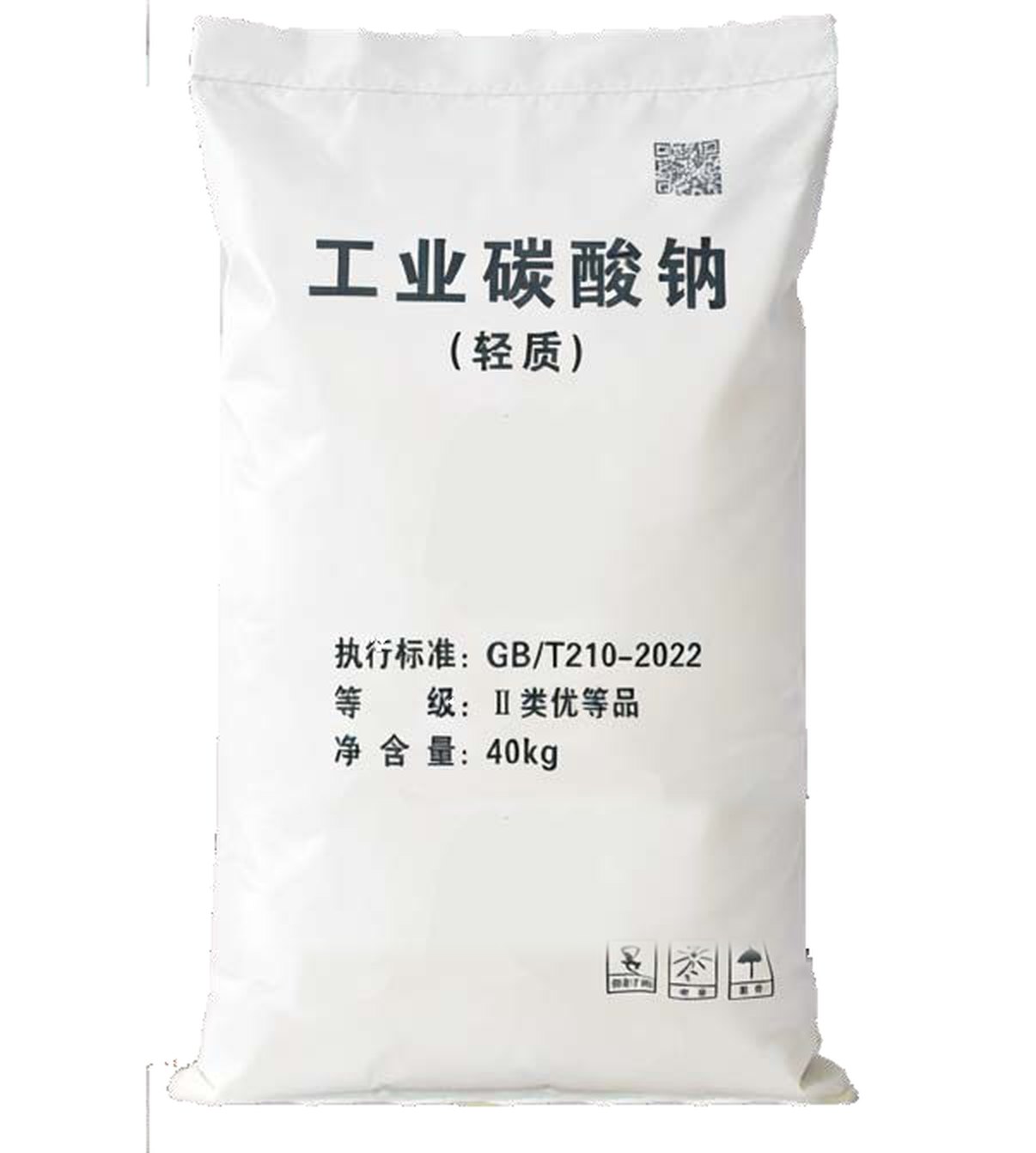
In force since 1 November 2022, replacing GB/T 210.1/210.2-2004. Class I is dense ash for special uses; Class II is general-industrial light and dense ash, each with superior, first and qualified grades. It limits total alkali as Na₂CO₃ (dry and wet basis), sodium chloride, iron, insolubles and, for dense ash, bulk density and particle size. The 2022 revision removed the sulphate requirement for Class II superior grade and added ICP-OES for iron.
Key differences
| Question | GOST 5100-85 | GB/T 210-2022 | What the buyer should do |
|---|---|---|---|
| Grade structure | grades A/B, higher/first/second | Class I/II, light/dense, superior/first/qualified | compare by values, not names |
| Na₂CO₃ basis | calcined and uncalcined product | dry and wet basis | ask for both, compare like with like |
| Sulphates | limited for higher and first grades | not limited for Class II superior | order sulphate testing in the COA |
| Loss on ignition | limited | usually not in routine release tests | request the value and method |
| Chlorides | B higher ≤ 0.4% | depends on class and grade | check the actual COA value |
| Test methods | GOST methods | GB/T methods incl. ICP-OES | confirm whether GOST-method results are required |
Does Chinese soda ash meet GOST 5100-85?
Distinguish "made to GOST 5100-85" (not true for a Chinese plant) from "meets GOST 5100-85 values" (a matter of fact for each lot).
- 01
Fix the grade
Take the GOST grade and quality from the specification and list its limits.
- 02
Request a full COA
Include every listed parameter, sulphates and loss on ignition, with methods.
- 03
Compare on one basis
Calcined (GOST) vs dry basis (GB/T) are close but not identical.
- 04
Independent check
For tenders, an accredited lab report by GOST methods or pre-shipment inspection sampling.
- 05
Fix it in the contract
List parameters, limits, methods and the arbitration analysis procedure.
Tender documents and contract wording
Typical documents: batch COA, accredited lab test report, SDS in Russian, certificate of origin, any mandatory conformity documents, specification and packing list. Ask the buyer early whether value-based compliance with a test report is accepted. In the contract, write e.g.: "Quality: meets GOST 5100-85 grade B, first quality, including Na₂CO₃ (calcined) ≥ 99.0%, NaCl ≤ 0.5%, Fe₂O₃ ≤ 0.003%, insolubles ≤ 0.04%, Na₂SO₄ ≤ 0.05%, loss on ignition ≤ 0.8%; COA per lot; arbitration analysis in an agreed laboratory."
Qinghai Zhenhuida supplies light Class II soda ash and provides COAs with values set against GOST 5100-85 limits on request.
Frequently asked questions
Can Chinese soda ash be supplied against a GOST 5100-85 tender?
Yes, if the lot's values meet the specified grade and this is proven by a COA and, if required, a test report. Confirm in advance that the buyer accepts this.
Which Chinese grade corresponds to GOST grade B?
Grade B is powder, matching light Class II soda ash. The quality level depends on actual values: Class II superior is often close to grade B first or higher, but check the COA.
Why check sulphates?
GOST limits sulphates for higher and first grades, while GB/T 210-2022 dropped this for Class II superior. If you do not order it, it may not appear on the certificate.
What does "calcined product" mean?
Na₂CO₃ content recalculated to the product after ignition, i.e. excluding moisture and volatiles. The Chinese standard uses a similar dry basis.
What is soda ash's warranty storage life?
Under GOST 5100-85, 3 months for grade A and 6 months for grade B. For imported soda ash, allow for transit time and storage conditions.
Is an accredited lab report needed?
It depends on the tender. Public and critical supplies often require it; commercial supplies usually rely on the producer's COA and incoming checks.
How should the requirement be written in a contract?
List specific parameters and limits, test methods, sampling and arbitration. "Meets GOST 5100-85 grade B, first quality" with a table of values is safer than just "to GOST".
What if an incoming result differs from the certificate?
Follow the contract: record sampling, run arbitration analysis in the agreed laboratory and file a claim on its results. That is why the arbitration procedure should be agreed upfront.
How to convert iron from Fe to Fe₂O₃?
Multiply the Fe value by about 1.43; for example 0.0018% Fe is about 0.0026% Fe₂O₃.
Is a certificate in Chinese a problem?
Tenders usually require a translation or bilingual certificate; ask for a COA in English or Russian, or a translation.
Is a polypropylene bag acceptable instead of a GOST paper bag?
It usually protects better against moisture but formally differs from the packaging described in GOST; if packaging is specified, confirm the buyer accepts an equivalent.
How do I check whether soda ash picked up moisture in transit?
Inspect bags for damp and caking, and test loss on ignition and Na₂CO₃ in the uncalcined product; higher loss on ignition indicates absorbed moisture.