Contents
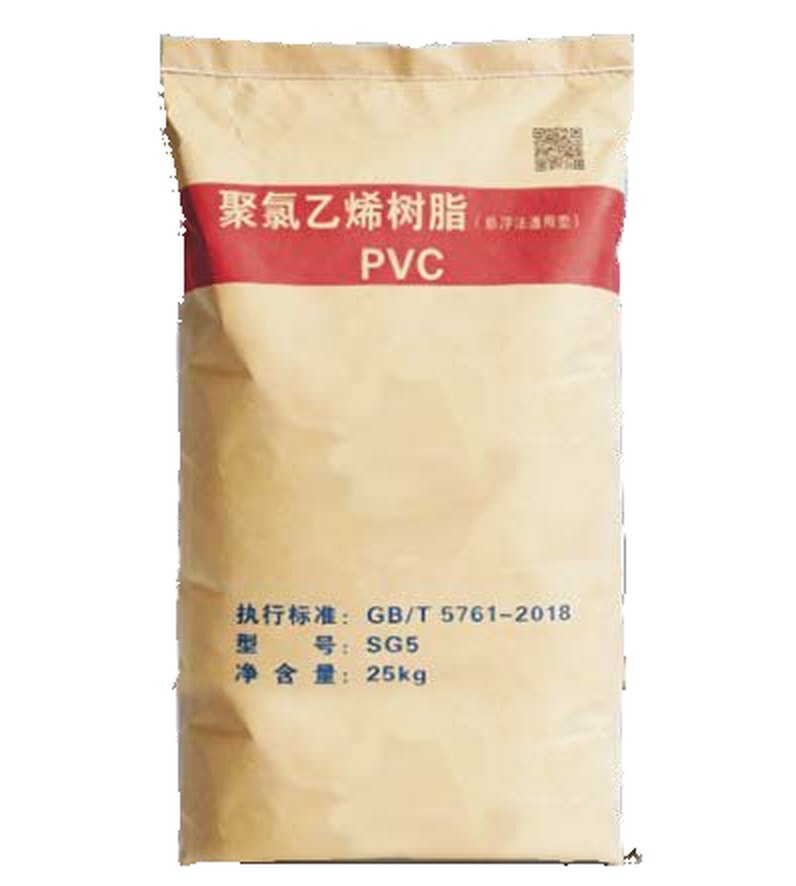
- Suspension PVC is the main resin for extrusion and moulding: pipes, profiles, cables, sheet.
- Emulsion (paste) PVC has very fine particles and forms a paste — plastisol — with plasticiser.
- The resins are not interchangeable: they run on different equipment.
- State the resin type, grade and product in your inquiry.
Requests often just say "PVC", but for a processor these are two different products. Suspension resin is processed as a melt — by extrusion and moulding. Emulsion resin is mixed with plasticiser into a liquid paste that is spread, cast or moulded and then gelled by heat.
Key differences
| Suspension (S-PVC) | Emulsion (E-PVC, paste) | |
|---|---|---|
| How it is made | vinyl chloride droplets polymerised in water with a suspending agent | vinyl chloride polymerised in emulsion with an emulsifier; latex is spray-dried |
| Particles | porous grains ~100–150 µm | very fine primary particles, agglomerates of tens of µm |
| Share of production | most of world output | much smaller |
| Processing | extrusion, injection moulding, calendering | pastes (plastisols): spreading, dipping, rotational moulding, spraying |
| Typical products | pipes, profiles, cables, sheet, film | artificial leather, wallpaper, flooring, gloves, coated fabrics |
| Grading in China | SG-1 to SG-8 (GB/T 5761) | paste grades per producers' own specifications |
| Price | lower | usually higher |
When to choose suspension PVC
Pipes and fittings
Rigid water and sewer pipes — usually SG-5.
Profiles and sheet
Window profiles, panels, rigid sheet.
Cable compounds
With plasticiser — high-K grades.
Film
Calendered rigid and flexible film.
When to choose emulsion PVC
If your process uses a liquid paste — coating fabric, casting, dip moulding — you need paste resin. Its particles disperse evenly in plasticiser and fuse into a uniform film on heating. Suspension resin cannot make a stable paste.
There is also a third type — bulk (mass) PVC, made without water or emulsifiers. It is used for clear products, but the market is small.
What to include in your inquiry
- resin type: suspension or emulsion (paste);
- grade or required K-value;
- product and processing method;
- key values: volatiles, bulk density, particle size, whiteness, residual vinyl chloride; for paste resin — paste viscosity;
- quantity, packaging and delivery point.
Qinghai Zhenhuida supplies suspension PVC resin. Emulsion resin availability is checked on a separate request.
Frequently asked questions
Can suspension PVC replace emulsion PVC?
No. Suspension resin cannot form a stable paste, and emulsion resin is not suited to extruding pipes and profiles. They are different products for different equipment.
What is a plastisol?
A paste of emulsion PVC resin and plasticiser. When heated it gels into a flexible material — used for artificial leather, wallpaper and coatings.
Which PVC is used for pipes?
Suspension PVC, usually grade SG-5 with a K-value around 66–68.
Why is emulsion PVC more expensive?
The process is more complex — emulsifiers and spray-drying of latex are needed — and production volumes are smaller.